 Dr. Kenneth Anders
 Catrin Fischer
 Gregor Glass
 Sven Wallrath
Feature Documentary
What do we know about the world, and where from? Experience from our own senses and hands seems to lose weight, while our perceptions of reality are more and more shaped by media. That's not a new finding but one that has recently come back at us with fresh impact on the stages where the rules on how we do and should see the world are negotiated: the internet, radio, film, television and social media.
Documentary film is no different in this regard. Not much seems to be left of the camera that used to capture the world with ease and tranquility, and very few works come along playfully or serenely these days. It's all or nothing in the competition for people's attention and judgment. Often, when we look for films suitable for our festival, the intention leaps right out of the synopses we read on filmmakers' portals: you shall be frightened, outraged, on our side.
Even when we've found works we decide to put trust in, questions on their transparency and credibility always require a second look. The film about a Chilean gold digger – might it be, after all, more of a fiction whose dreams are to mitigate the harshness of the world for us? Could the story of Moscow's Garagniki contain hidden messages about the war in Ukraine that we don't understand? What does the life of that hands-on woman in her Caucasian steppe reveal about the cruel conflict in the region?
What is the relationship between a story about the relocation of Cambodian people for a dam to be built and the patterns of environmental discourse in the West? Is the film about changes in Berlin Moabit condemning gentrification? Why make a connection between forests in Germany, Indonesia and Congo? Is that portrait of a religious community in Syria an honest plea for peace or does it contain skewed information that we can't see? And what does the film about an Armenian boy who has lost his home and childhood to the war want to show us?
We don't take our choices easy. Like a prism, we turn every film over and around to find if we can see through it. This year's selection was shaped by our efforts to pass the questions we asked above on to our audience. We believe that the films we chose are ones that are outspoken about how they work – which means that they are also open to criticism. That's why we invited them to Eberswalde, and their makers along with them, so we can discuss their individual cinematic styles together and, ultimately, get closer in touch with reality.
Hoping that we may succeed in this effort, we wish you a pleasant festival week!
 Julia Hebestreit
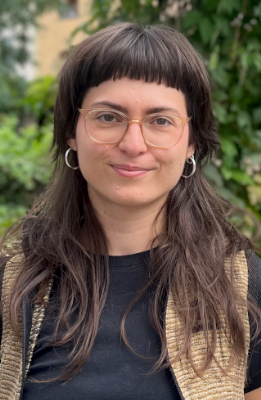 Ana Rodrigues
 Olaf Schilling
 Thomas Winkelkotte
Short documentary film
There's no need to enumerate the world's big crises – they instantly pop up in our minds by themselves. To escape brooding about them, our films open up a wonderful microcosm of the world's provinces, which may seem alien at first. But they tell us about something we know: about the urge to make sense of one's daily life even under hard conditions. Thus, the foreign becomes familiar, and the commonplace becomes remarkable.
In Machos, the well nourished bulls on their lush meadows have no idea where they will be shipped next – very much unlike the donkey from Too Baldary, who, day after day, carries pupils to their school through an ice-cold landscape in Kyrgyzstan. Once the children have arrived, they learn, play and laugh and manage to forget about the steep path that brought them there for a moment.
Different as those circumstances are, the films always point at the things that keep their protagonists grounded. Even in the taiga, humour seems to wash away the most arduous daily chores for the three sisters in Tri Sesteri. In Brazil, the rainforest shrinks, and a prospective shaman lets us in on his view on nature in MUKUNÃ APRENDIZ DE PAJE: every saved life an epiphany, every plant a gift.
Back to Germany, Sandra lacks a bit of that ease, and she has her reasons, as we shall see in Demontage, where her car scrapping shop on the fringes of Lüdenscheid is dismantled itself. But even here, amidst all those challenges, the workplace becomes a better world of sorts – not because circumstances were easy but because community and team spirit can be mobilised against them.
Out of 114 submissions, the pictures and voices of these films were the ones that moved us most. They remind us to start taking in the microcosm all around us more consciously again. For there are the things we can see, understand and change.
 Lars Fischer
 Sascha Leeske
 Odilia Mast
 Daniel Steinbrück
SHORT FILMS
The village streets are empty, the picture is black and white. The young move between donuts, drinking and work. Fabian beats someone into hospital, then he has to make a run for it. Carina has given notice, she wants to move to New York or, at least, Vienna. Lenz is the one who's left, but his workplace, the last pub in the village, is closing down, and his small world dissolves between his hands.
Many films of this year's selection deal with the topic of being uprooted and alienated. It may be people's own choice, as for Bora, who moved to the US for her studies and now feels a stranger in her own land, or imposed by circumstance, as in Maybe in March, where the father's illness forces his family to give up their farm. And sometimes one's home changes so much that one becomes uprooted and alienated without ever having left. For three young fishermen, staying put evolves into a struggle against hunger and illness. What once was home becomes enemy terrain. Tamim has a hard time gaining a foothold in his new home when he can't do things as he used to.
Our protagonists, in the places where they live, are often faced with a choice how to act – whether to stay or to go, to change things or react. Like Nina, who consciously faces her own origins and makes a decision in favour of her culture. Or Dawidek, who dreams of open borders, while Henryk puts traps on his property to reclaim it from those youngsters on their motorcycles. In a Mexican area reigned by drug cartels, Yolanda and her granddaughter try to make a living without losing kindness and courage. In a pub in the Austrian hinterland, young people indulge in singing, encouraged by the old – a conscious decision or just the way things go? In Cuba, Yaimita hopes that her trans-atlantic flirt will turn into love but then realises that she has no choice and the best she can hope for is probably an air conditioner. Erdem and Yasin are hoping not to be caught, but the community is too gossipy.
And Martin digs a hole in search for … well, what could it be? Have a look for yourselves.
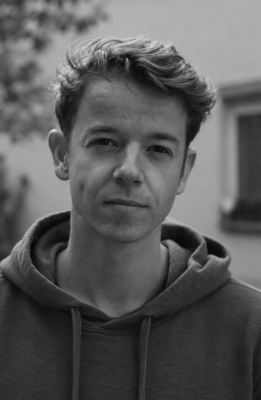 Jonas Geldschläger
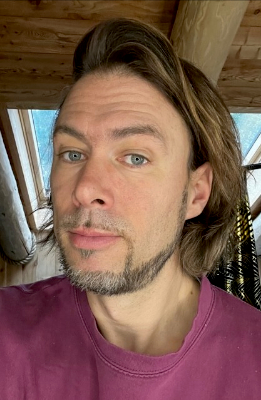 Jacob Ilgner
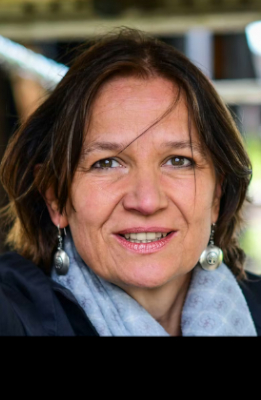 Almut Undisz
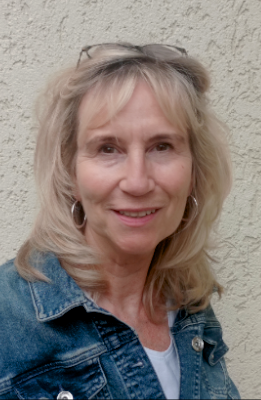 Kathrin Welke
ANIMATED FILM
Borders are strange things that are not always easy to explain. Put up for protection, for geographical or historical reasons, sometimes drawn seemingly at random. Some are soft and permeable, some appear rigid and set in stone. Changing their course often requires a fair amount of courage, naivety or effort and is rarely ever an easy undertaking.
But then art enters the scene, ignorant of those difficulties, slipping past our important considerations and lets us have a glimpse onto the other side. Because art comes with its own, different border regime, and we can just sit and watch, wondering.
In Au gré de l'iode, the sea knocks on a taxidermist's door, retreats, knocks again and then, as nobody opens, stops asking and just enters, upsetting what was to be preserved. That's what happens when things swap places.
In Water Girl, the movement is somewhat reverse: Mia, a diver for seashells, lives a life between silent algae and fish, her love and her unmet wish for a child. Her daily excursions into the sea are to protect her from a world that waits for no one and keeps changing wherever you go.
In No Room, things also venture beyond where they belong, and this time it's traffic, not even looking for a door and bringing the whole road and its eternal surf with it, noise, exhaust fumes and all. Whoever lives here has to put up with the outside world, whether they want it or not: adapt, hitch a ride, become part of the flow? Or is it possible to remove the problem by cutting it out?
This, at least, doesn't always work where borders have shifted. A young girl awakes and looks for her mother, only to find her in a wine bottle. She smashes the glass to set her free, but the next instant her mother is lost in the next bottle. Do dna asks a question that is more serious than it sounds at first: what if the border hasn't been drawn by someone from outside? What if someone put it up themselves and would rather stay inside than be freed?
Going one step further, The In-the-Head Film refrains from even the attempt to separate inside and outside. Pictures, sounds, colours and associations – there is no more wall to knock on, no glass to be smashed. Whoever enters is trapped in a world that can no longer be sorted out because there is nothing but transition.
If you do manage to escape, it will be right into the present. In Hope Road, it's not a single person's imagination that crosses the line but the world as a whole: wars, crises, AI gulping up resources without ever getting enough. A filmmaker is torn between her artistic ambitions and her role as a mother, both inextricably entangled, as it seems. It takes a child's look to open up a gap in this stifling reality.
When even one's own perception doesn't offer much to hold on to, the question remains how we should behave towards the world. Take, for instance, Like Friend, Like Deer, where a gamekeeper kills a poacher, blurring the lines between right and wrong. Or Fleurs d'Oranger, where the border is not to be negotiated but has been marked out in advance: a mother draws a line around her daughter which is not to be crossed by the outside world. But Nour has long begun to collect traces of what's happening beyond, fragments of a city and its disappearing history.
And then, sometimes, the lines dissolve unexpectedly. It might be a thunderstorm, a broken connection, a loss of reception. No more electricity, no mobile phone, no internet. A human being sets out, meets others, finds ways and hears things that were buried under all the communications before.
And suddenly, without electricity, networks or signal, there is again a world to be seen.