Chile, Netherlands / 2024 / Documentary / 77 min
OT Spanish / UT English
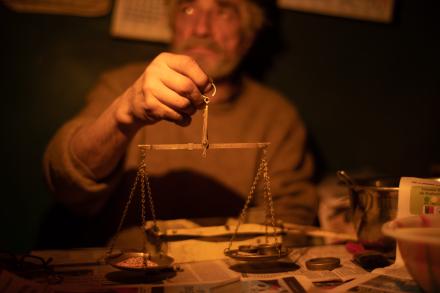
On the island of Tierra del Fuego – far to the south, in a remote part of Patagonia – 60-year-old Toto works as one of the last gold miners. It is a gruelling and precarious life, and his health is already failing. But he has to carry on. He receives support from his son Jorge, who is full of ideas and drive: he is designing a machine for panning for gold. But the project cannot be realised as quickly as initially thought. The years come and go. Toto is slowly growing impatient, his health is deteriorating, and the machine is becoming ever larger, more complex and heavier. Will Jorge ever manage to finish it? The film is a multi-layered, vivid portrait of a father-son relationship and evokes the magic inherent in the dreams that spur us to action.
Regie: Alfredo Pourailly de la Plaza, Produktion: Francisco Hervé, Annemiek van der Hell, Alfredo Pourailly De La Plaza, Drehbuch: Alfredo Pourailly De La Plaza, Javiera Velozo Saldivia, Francisco Hervé, Kamera: Alfredo Pourailly de la Plaza, Schnitt: Javiera Velozo, Alfredo Pourailly De La Plaza, Melisa Miranda, Ton: Gustavo Agurto Vergara, Rodrigo Méndez Telias, Musik: Karl Heortweard
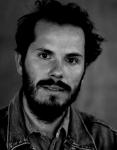
Alfredo Pourailly De La Plaza works as a producer and director of film, photography and cultural management projects, which he develops with his company 55 Sur Media with the aim of preserving, enhancing and disseminating Chile's cultural, historical and natural heritage. LA FABULOSA MÁQUINA DE COSECHAR ORO is his first film.
Germany / 2026 / Documentary / 79 min
OT German / UT English+German
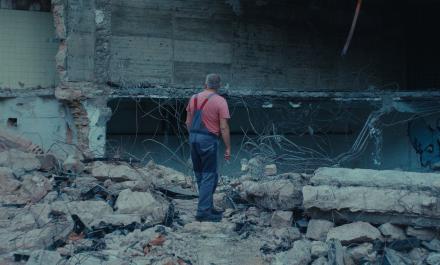
A street corner in Berlin-Moabit is undergoing a transformation: an ageing supermarket is becoming a building site and then a new building. Shelves are being stocked, walls knocked down, breaks taken and money counted. The people working here are bringing the place to life. What is their relationship with it? How does it shape the conditions of their work? The different versions of the place overlap, creating a coexistence of refrigerated display cabinets, scaffolding and exposed concrete. Sometimes playful, sometimes eerie, repetitions emerge, like echoes between worlds. Over a period of five years, the film explores the relationship between work and change in this place with patience, humour and a loving eye.
Regie: Paul Sonntag, Produktion: Oscar Meyer-Ricks, Judith Frahm, Paul Sonntag, Drehbuch: Paul Sonntag, Kamera: Paul Sonntag, Schnitt: Katrin Ebersohn, Ton: Jan Brett, Musik: Fabian Kalker
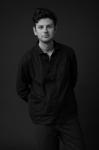
Paul Sonntag (born in Berlin in 1991) works as a cinematographer and filmmaker. His cinematography has been screened as part of Berlin Art Week at the Neue Nationalgalerie, at the Kunsthalle Basel, the Salzburger Kunstverein, as well as at the Toronto International Film Festival’s Next Wave section, the Winterthur Short Film Festival and the Rencontres Internationales Paris/Berlin. He initially studied architecture and photography in New York, with stints in Prague, Paris and Lagos. In 2025, he completed his final examinations in cinematography and documentary film directing at the Film Academy Baden-Württemberg. During his studies, he was a scholarship holder of the German National Academic Foundation, a participant in the CPH:DOX Academy and part of the Frame Within A Frame Talent programme at the Tallinn Black Nights Film Festival. NOTHIN REMAINS NOTHING DISAPPEARS, his feature-length debut, was selected for the documentary film competition at the Max Ophüls Prize Premiere in 2026. Paul lives and works in Berlin-Moabit.
United States, France, Ireland, Jordan / 2024 / Documentary / 86 min
OT Armenian / UT English
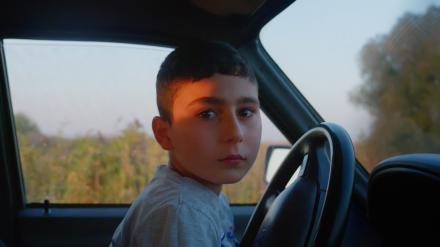
Eleven-year-old Vrej lives in a village in the self-proclaimed Republic of Artsakh. He dreams of becoming a dentist. The boy’s life takes a sudden turn when his family is forced to flee to Armenia as war breaks out. In exile, Vrej waits impatiently for victory, but the reality is quite different. Upon returning to their devastated village, efforts to prepare the younger generation for war begin immediately. Over a period of four years, the film follows Vrej as he grows into a teenager amidst war, flight and displacement. The result is an accessible and powerful portrait of a young person in a community shaped by trauma and hope.
Regie: Sareen Hairabedian, Produktion: Azza Hourani, Sareen Hairabedian, Drehbuch: Sareen Hairabedian, Kamera: Sareen Hairabedian, Schnitt: Sareen Hairabedian, Raphaëlle Martin-Holger, Ton: Tom Effinger, Musik: Tigran Hamasyan
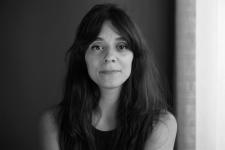
Sareen Hairabedian is an Armenian-Jordanian documentary filmmaker based in the U.S. She is a 2023 fellow at Video Consortium x DOCNYC and Creative Armenia and founder of the Production company HAI Creative. MY SWEET LAND is her feature-length debut.
Germany, Indonesien, Kongo / 2026 / Documentary / 80 min
OT German / UT German
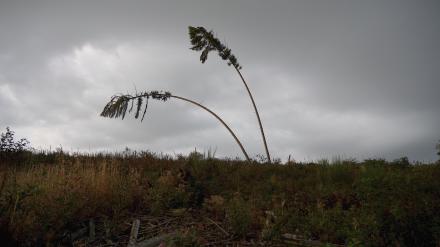
Daniel Kötter has been a regular guest at the Provinziale in recent years with new productions. For this year’s film, he first invited the Indonesian instrument maker and musician Ikbal Lubys and the Congolese journalist and women’s rights activist Olande Byamungu, along with their children, to the countryside of his own homeland. The forests of the Bergisches Land have been damaged by drought and bark beetle infestations. In return, Lubys and Byamungu take Kötter’s camera to those places in their home countries where the loss of forest is leading to profound social and political upheavals. The landscape and its social systems are undergoing fundamental change. The documentary fairy tale *Kukata Miti* poses the question: What defines a forest? Who do we encounter there, and how do we redefine the relationship between human and non-human actors?
Regie: Daniel Kötter, Produktion: Daniel Kötter, Drehbuch: Daniel Kötter, Kamera: Daniel Kötter, Schnitt: Daniel Kötter, Ton: Daniel Kötter, Musik: Daniel Kötter
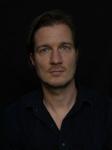
Daniel Kötter, born in Bergisch Gladbach in 1975, is an internationally active filmmaker and music theatre director. His works oscillate between various media and institutional contexts, combining techniques of structuralist experimental film with performative and documentary elements. They have been shown worldwide at numerous film and video art festivals, in galleries, theatres and concert halls. Between 2017 and 2020, he produced the documentary trilogy ‘Hashti Tehran’ (2017, 60’), ‘Desert View’ (2018, 84’) and ‘Rift Finfinnee’ (2020, 80’) about urban peripheries in Tehran, Cairo and Addis Ababa. ‘Hashti Tehran’ won the Special Prize at the German Short Film Awards, whilst ‘Rift Finfinnee’ won the DEFA Prize at DOK Leipzig.
Russian Federation / 2024 / Documentary / 80 min
OT Turkish / UT English
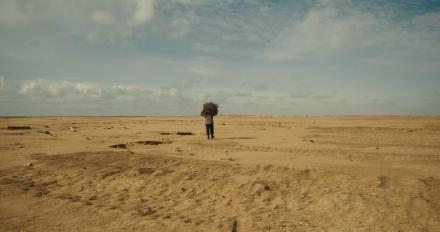
The Nogai are descendants of the Golden Horde and live in the southern Caucasus region of Russia. Once lush and green, the Nogai Steppe is now turning into a desert. In autumn, a group of men and women led by Gulfira set off in an old bus, travelling deep into the new desert for several months. Every day, they walk many kilometres in an icy sandstorm, planting shoots of juzgun – a shrub with long roots that can hold back the sand. Later in the year, their youngest son gets married. Eventually, both sons are called up to fight in the war in Ukraine. Will their efforts bear fruit?
Regie: Tatyana Soboleva, Produktion: Tatyana Soboleva, Drehbuch: Tatyana Soboleva, Danyal Isakaev, Kamera: Nikita Aniskin, Schnitt: Tatyana Soboleva, Tatiana Vihreva, Ton: Victor Mors, Musik: Elmursa Yanukaev

Tatyana Soboleva is a Russian film director and producer. Born in Moscow. In 90th she studied drama, philosophy and creative writing at the Literature University. In 2004 she graduated from the All-Russia State Institute of Cinematography (VGIK) with a degree in Film Directing. In recent years she’s made more than 20 documentaries that have successfully participated in international film festivals and deserved prizes. Twice her films were nominated on national film award “Laurel branch”. In 2012-2016 Tatyana participated in number of International Documentary Workshops and Pitching sessions like Ex-Oriente (Czech Republic), Dragon Forum (Poland) and EDN’s professional events (Tromse, Thessaloniki, Baltic Forum). In 2017 Tatyana became a participant of “Berlinale Talents”. Tatyana is CEO of Dostoevsky Dok production and executive director of industrial programs of DOKer Moscow IFF.
France / 2025 / Documentary / 54 min
OT Russian / UT English
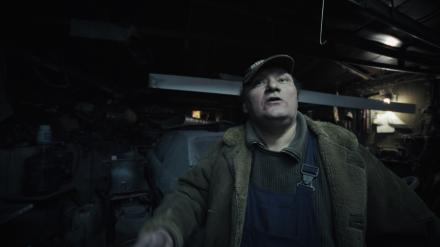
With the collapse and disintegration of the Soviet Union in 1991, many residents’ worlds also fell apart. In their garage communities, the ‘Garagniki’ (гаражники) are surviving this apocalypse and the associated economic crisis. New subcultures and networks have emerged; alternative forms of economic activity have taken shape, found success and become firmly established. An informal economy centred on repairing, producing, providing food and spending time together as a community emerged. Yet in 2018, this no longer fits into the visual landscape of Moscow in Putin’s Russia; these spaces of freedom are suddenly under threat. The film takes us back to the historical underworld of a parallel, wondrous Russia.
Regie: Stany CAMBOT, Produktion: Les Films Déplanifés, Echelle Inconnue, Leitmotiv Production, Drehbuch: Stany CAMBOT, Kamera: Stany CAMBOT, Schnitt: Rodolphe MOLLA, Bernard SASIA, Ton: Jules WYSOCKI, Musik: none

Stany Cambot is an architect, visual artist, set designer and director. He initially worked with the playwright Armand Gatti at ‘La Parole Errante’. In 1998, he founded the group ‘Echelle Inconnue’, with which he carried out artistic projects and experiments centred on destroyed cities and areas, created several video installations and digital works, and shot short films about the mobile city in France, Algeria, Moldova and Russia. He is the writer and director of the documentary films *Blouma* (2019) and *L’Apocalypse a déjà eu lieu* (2025). Alongside this, he contributes to various academic and specialist publications. He is the author of the book *Villes nomades, histoires clandestines de la modernité*, published by Éditions Eterotopia.
France, Cambodia / 2026 / Documentary / 103 min
OT Cambodian / UT English
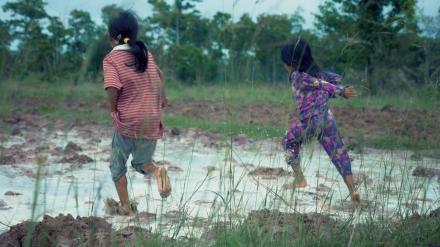
Neang is an indigenous woman from north-eastern Cambodia whose village was flooded by a dam built for a hydroelectric power station. The residents are allocated a new settlement, but no sooner have they settled in to some extent than industrial exploitation interests once again threaten to take their land away from them. The conflicts Neang now finds herself facing are complex. Whilst the old village is already under water, the cohesion of the community and family, as well as their traditional, earth-centred way of life, are coming under pressure.
Regie: Polen Ly, Produktion: Lucas Sénécaut, Drehbuch: Polen Ly, Kamera: Polen Ly, Schnitt: Penda Houzangbé & Jack Atmore, Ton: Polen Ly, Musik: None
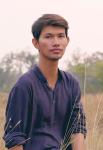
Polen Ly is self-taught filmmaker based in Cambodia. Polen’s artistic practice is rooted in social issues and nature, while his storytelling style is often expressed through different means of visualization and metaphors. Some of his films have gained recognition at international film festivals, including Tropfest SEA in Malaysia, where his short film "Colourful Knots" won the first prize. The following year, Polen was selected as a Director Fellow at the Asian Film Academy in Busan, Korea. In 2021, his short documentary "Side By Side" won the "Youth Jury Prize" at Locarno International Film Festival Open Door. His latest short fiction, "Further And Further Away", premiered at Berlinale International Film Festival in 2022 and won "Best Live-Action Short over 15 minutes" at Palm Springs International Film Festival Shortfest.
Syria, Italien / 2025 / Documentary / 97 min
OT Arabic / UT German

In the Qalamun Mountains of Syria, overlooking the vast desert, stands the ancient Christian monastery of Mar Musa. The monastic community living here is striving to revive dialogue between Christians and Muslims in a region torn apart by religious tensions. The film tells the story of the war in Syria and the period of fragile peace from the perspective of this community. Through a sensitive, observational narrative style, it explores the question of how life can move forward after such a devastating war, and what role a loving faith can play in rebuilding a society marked by deep mistrust and devastation. Can religion help to heal the wounds?
Regie: Shahab Kermani, Produktion: Markéta Polednová, Shahab Kermani, Drehbuch: Shahab Kermani, Kamera: Shahab Kermani, Schnitt: Shahab Kermani, Elisabeth Rassbach, Nicole Schmeier, Ton: Janis Ahnert, Musik: Shahab Kermani, Tom Rieder
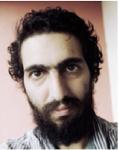
Shahab Kermani, born in Germany in 1988 as the son of Iranian parents, studied time-based media at FH Mainz (Bachelor of Arts) and completed his diploma at the Art University of Media Cologne. In addition to short and experimental films, he produced a feature-style film as well as four feature-length documentary films, which were created in seven countries.
